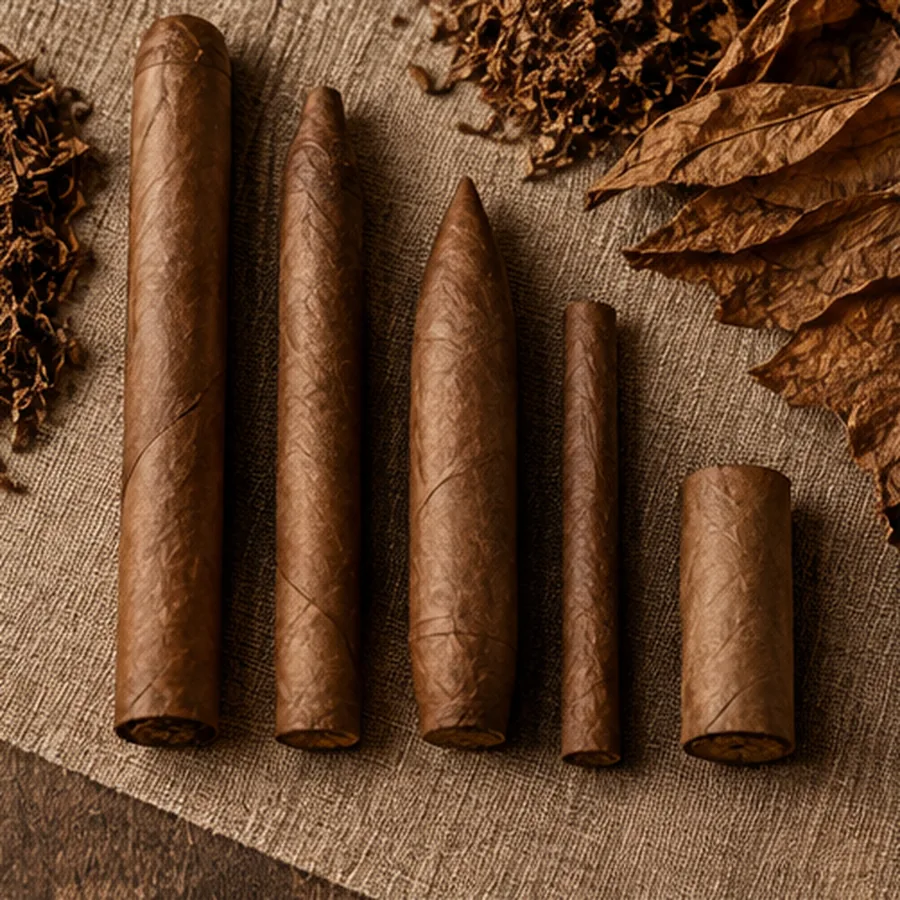
The vocabulary of shape
Industry terminology often distinguishes straight-sided cigar shapes, sometimes called parejos, from a wide collection of tapered or otherwise non-straight-sided forms grouped as figurados. The vocabulary is descriptive, but dimensions can vary from maker to maker.
How standards emerge
Manufacturing methods, consumer conventions and packaging practices can all contribute to the stability of a product shape over time. Museum collections and catalogues provide evidence of how design conventions changed.
Look at the object, not a ranking
There is no need to turn every shape difference into a recommendation. As a cultural guide, this atlas uses typology to understand visual language and manufacturing history, not to rate or promote tobacco products.
This article documents cultural and manufacturing history. It does not recommend tobacco products or encourage smoking. Tobacco products are addictive and harmful to health.
CDC tobacco information ↗