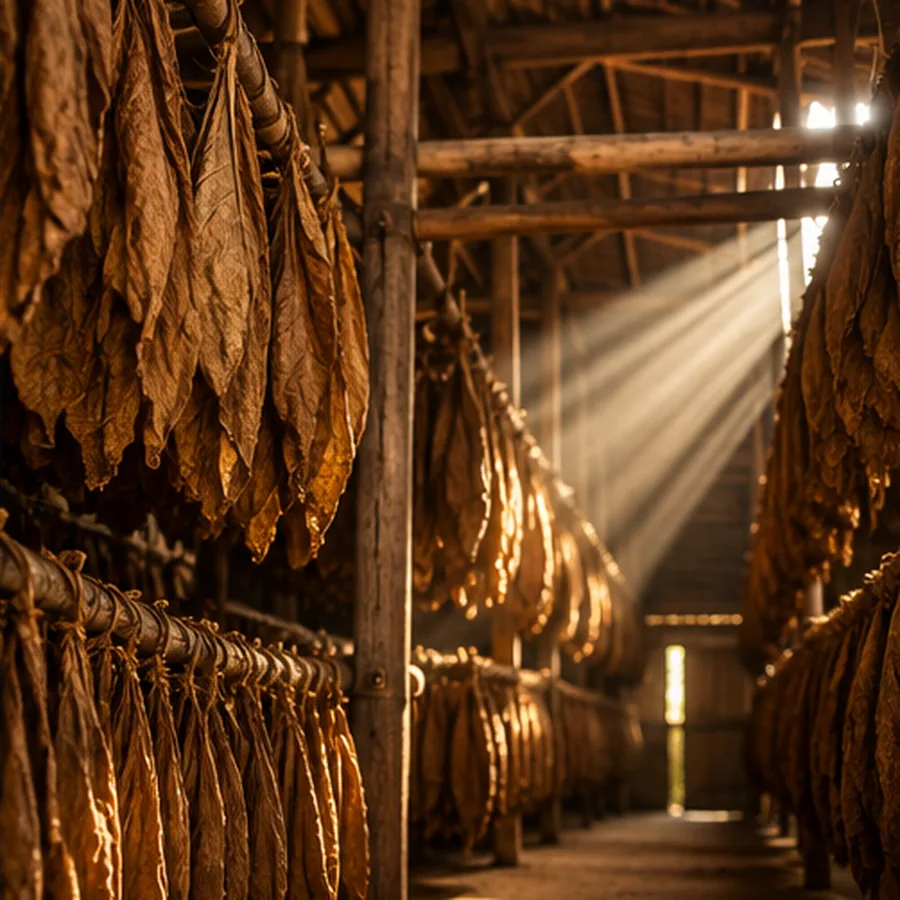
Why the leaves are hung
Fresh tobacco leaves contain moisture. In many traditional methods of air-curing, harvested leaves hang in barns or sheds while moisture is gradually lost. Building design, airflow and humidity can influence the process; methods vary by crop and region.
Curing and fermentation are different
Curing, storage and fermentation are distinct terms in tobacco processing. Some tobacco types undergo additional stages after curing to change physical and chemical characteristics. The methods and timelines are not identical across farms or manufacturers.
A note on health evidence
Processing does not eliminate the health harms of tobacco. Nicotine remains present, and public-health agencies document that cigar smoking exposes users and nearby people to harmful substances. Cultural and agricultural history should not be confused with health endorsements.
This article documents cultural and manufacturing history. It does not recommend tobacco products or encourage smoking. Tobacco products are addictive and harmful to health.
CDC tobacco information ↗